
A beautiful accident. How and why a natural pearl is born

Rachel Warner FGA DGA
|
5 August 2026
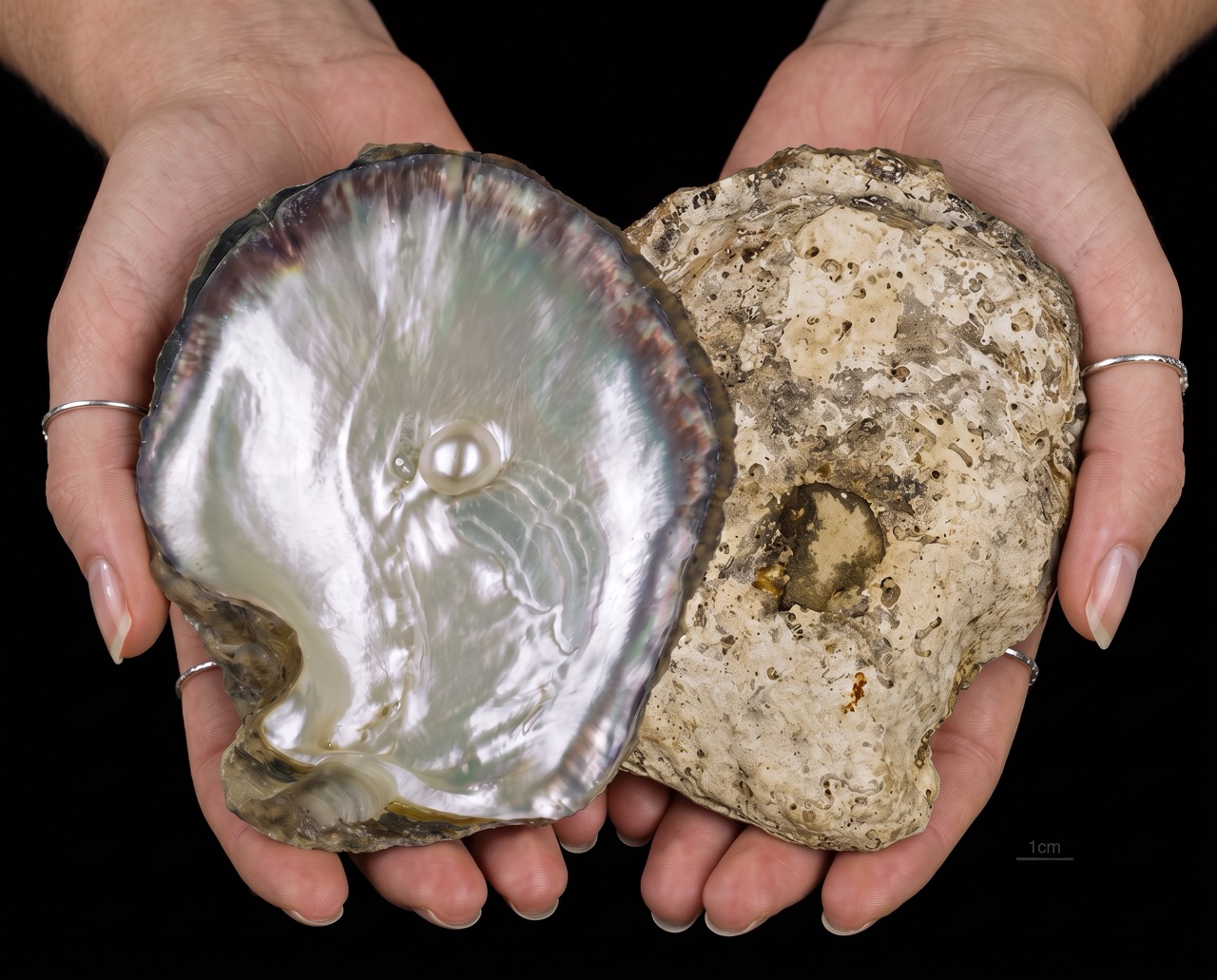
This article explores how natural pearls form inside oysters, revealing the science behind their creation and helping understand what makes these rare organic gems so valuable and unique.
The mysteries of pearl origin and formation have fascinated mankind for millennia. For as long as we have known and delighted in these gifts from the sea, the myths and superstitions surrounding their beginnings have only added to their allure.
Whilst theories differed across cultures, an unsurprising number of them involved mystical creatures or gods and goddesses. For a treasure as rare and luminous as a pearl could surely not be formed without the touch of something otherworldly.
In India, whose ancient texts hold some of the earliest written references to pearls, it was believed that pearls formed from dew drops which fell from the heavens into oysters when they came to the ocean surface to breath. In Ancient China pearls were thought of as intrinsically connected to dragons who variously made them inside their brains, carried them in their mouths and accidently dropped them when they fought or otherwise cried pearl tears which fell into the sea and were swallowed by oysters. Both European and Japanese folklore also favoured tears as a creation story for these luminous gems, but rather than dragons they believed mermaids and sea nymphs to be their source. The classical Greeks and Romans were on board with this theory too, Aphrodite (aka Venus), reputedly cried tears of joy on stepping ashore from her sea-borne scallop shell and these were washed back into the sea where they solidified into pearls.
What all these myths share is a sense of the reverence in which pearls were held and we will dive deeper into stories of myth and legend in a later post. For now however we are going to look at the somewhat more prosaic reality of pearl formation and whilst lacking in mermaids and dragons, it really is no less remarkable for it.
Until relatively recently, the widely held belief was that a pearl was formed when a grain of sand entered an oyster. However, oysters live on the sea bed and are in constant contact with sand so it would surely be unlikely that they would be aggravated by something so commonplace. They are in fact highly efficient filter feeders and are perfectly adept at expelling any sand that gets drawn in with their dinner. If confirmation is needed then the Swiss Gemmological Institute SSEF has stated that after testing hundreds of thousands of pearls in their laboratory, they have “never found a grain of sand inside a natural pearl.” So there we have it. But if not sand then what is it that prompts an oyster (or any pearl producing mollusc) to form a pearl?
A pearl is created as a result of irritation to the oyster typically caused by an injury to the soft outer tissue of its body, known as the mantle. This may be the consequence of an attack on the oyster by another sea creature or invasion by a parasitic worm for example. Mantle cells damaged by this injury can become displaced and regroup elsewhere within the oyster forming a cluster known as a pearl sac. And it is this little balloon-like sac that provides the perfect cocooning environment for a pearl to form and grow. Why? Because these mantle cells have one singular purpose and that is to secrete calcium carbonate which creates and grows the oysters shell with its beautiful iridescent inner lining which we know as nacre or mother-of-pearl. So when a group of these cells detach and form a pearl sac, they will sometimes continue their job only this time the calcium carbonate remains inside the sac and begins to form a pearl.
Calcium carbonate can occur in various different forms but in this case it takes the shape of tiny little platelets of aragonite which are cemented together by small amounts of a protein called conchiolin. These platelets will slowly be laid down layer upon overlapping layer, gradually building up a fine concentric structure to the growing pearl. Over time the pearl will increase in both size and beauty as the deeper the layers of nacre it builds, the more radiant and lustrous the pearl will appear.
Many thousands of oysters will be opened before one of these natural treasures is found, the result of tiny, hard-working cells going about their business year after year. An unpredictable occurrence beyond anyone’s control, the formation of a pearl is a natural accident but one with an enduringly beautiful result.